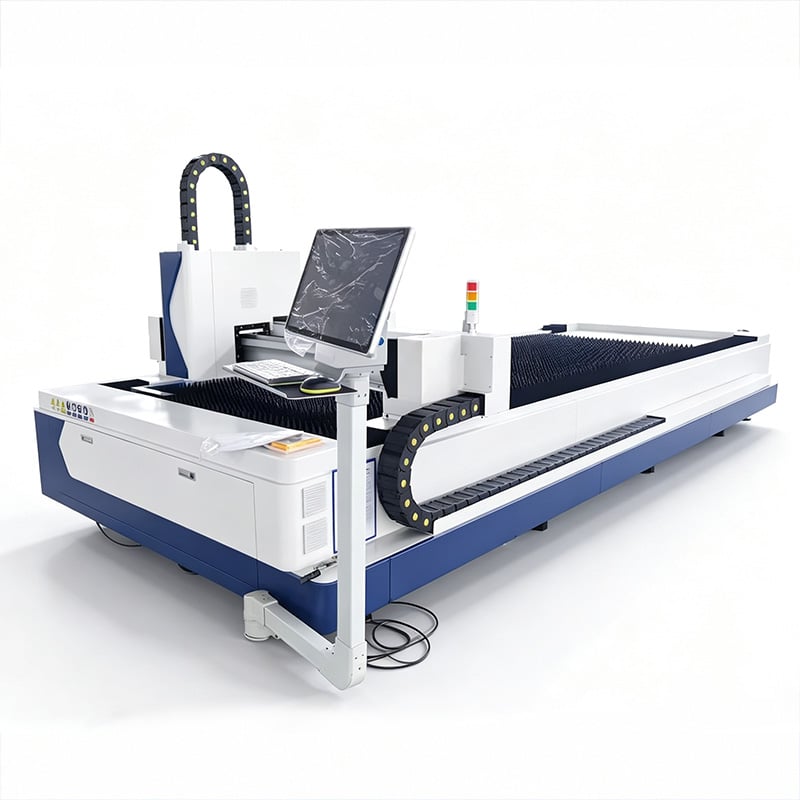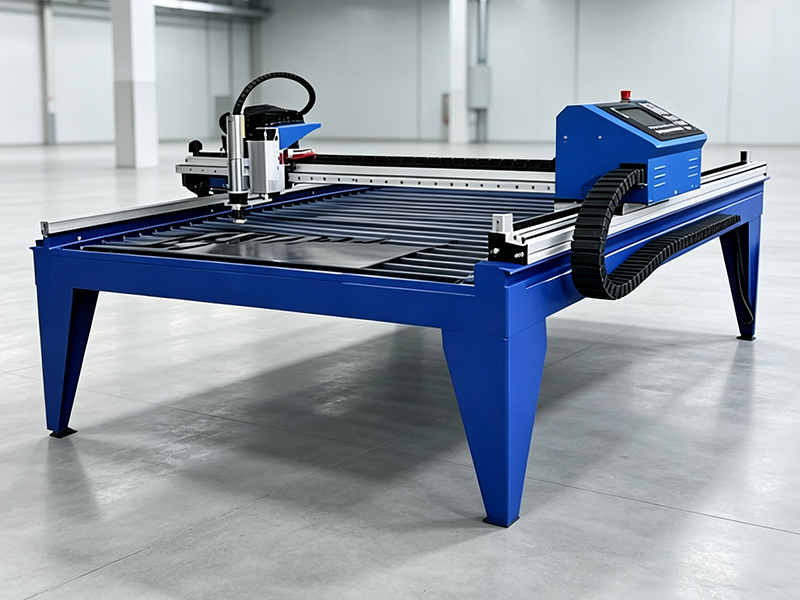
Laser cutting is reshaping the landscape of sheet metal blanking. In recent years, competition within the equipment market for the sheet metal processing industry has intensified, leading to shrinking profit margins for suppliers of various cutting systems. Influenced by factors such as international trade friction, fluctuations in overseas orders, and a cooling outlook for the domestic manufacturing sector, the market growth for traditional flame and plasma cutting equipment has slowed. Meanwhile, as downstream industries—including construction machinery, enclosures and cabinets, automation equipment, automotive components, and steel structure fabrication—continue to develop steadily, the demand for metal blanking has shifted toward higher precision and greater flexibility. Consequently, the application scope for laser cutting technology has expanded, driving a consistent rise in market demand and fueling ongoing technological iteration and industrial advancement within the domestic laser cutting equipment sector.
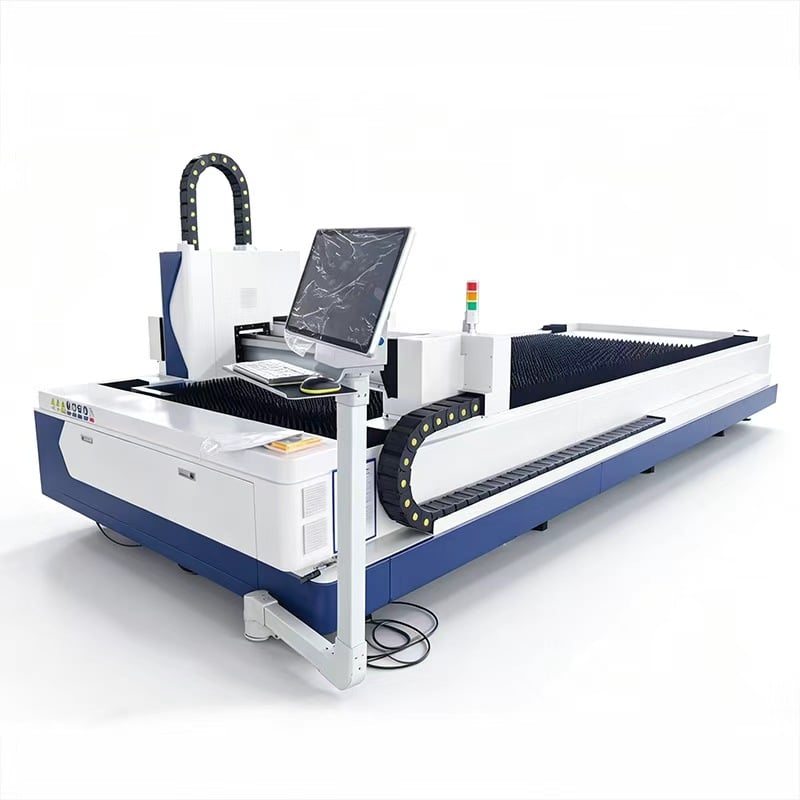
Laser cutting: Five Key Process Advantages That Overcome the Limitations of Traditional Cutting
Compared to traditional cutting methods like oxy-fuel or plasma cutting, laser cutting offers faster speeds, higher precision, and consistent quality. It produces a narrow kerf and a small heat-affected zone, resulting in minimal workpiece deformation and smooth cut edges, which reduces the need for secondary processing. Leveraging CNC programming, it eliminates the need for custom molds and can process flat sheets, tubes, and complex, irregularly shaped parts. As a non-contact process, it exerts no mechanical pressure, making it suitable for metals of varying hardness. Its high level of automation makes it ideal for batch production; furthermore, when combined with intelligent nesting software, it minimizes waste and maximizes material utilization.
For a given plate thickness, laser cutting can be more than ten times faster than traditional cutting methods, offering a distinct advantage for batch production. Traditional oxy-fuel and plasma cutting involve high heat input and produce wider kerfs, making workpieces prone to thermal deformation; furthermore, the resulting cuts often feature dross and burrs that require manual grinding or deburring, and the overall processing precision is limited. In contrast, laser cutting utilizes a high-energy beam, which minimizes thermal damage to the material and keeps the heat-affected zone under control. In most cases, parts require no secondary grinding after cutting, with dimensional accuracy and edge smoothness far surpassing those achieved by traditional cutting processes.
Laser Cutting: Suited for Diverse Industrial Applications, Balancing Short-Term Investment with Long-Term Costs
Traditional cutting equipment entails lower initial procurement costs and is suitable for the rough processing of thick steel plates; however, it has significant limitations when it comes to processing thin sheets, precision components, or complex shapes. Such equipment often requires lengthy setup times for complex parts, results in poor consistency across finished products, and incurs high labor and rework costs—all of which drive up the per-unit production cost.
Although laser cutting equipment requires a higher upfront investment, it is exceptionally well-suited for precision sheet metal production involving a wide variety of parts in small to medium batch sizes. Thanks to its high processing efficiency, superior yield rates, and minimal material waste, it effectively lowers overall production costs in the long run, aligning perfectly with the customized production requirements of modern sheet metal fabrication facilities. It is widely used across various sectors—including structural components for construction machinery, enclosures and cabinets, frames for automated equipment, automotive parts, and steel structural elements—to meet the metal-blanking needs of diverse industries.
Laser Cutting: Keeping Pace with Manufacturing Upgrades to Help Enterprises Enhance Quality and Efficiency
As downstream industries continue to upgrade, the market increasingly demands higher precision, shorter delivery cycles, and greater product diversity for metal components. Traditional cutting processes are struggling to keep pace with the growing need for high-precision and flexible production. Laser cutting technology, through continuous iteration and advancement, has overcome the bottlenecks of conventional processing, offering both high-precision machining capabilities and production flexibility. By adopting laser cutting solutions, sheet metal enterprises can shorten production cycles, minimize losses from rework, and enhance product quality—thereby strengthening their competitive edge in a fierce market and driving the transition of sheet metal manufacturing toward digitalization and intelligent production.