Discover how a CNC tube laser cutter delivers high-precision, fast, automatic cutting for round, square, rectangular and profile metal tubes. Learn benefits, applications and what to check before buying a fiber tube laser machine.
If your workshop cuts metal tubes, pipes and structural profiles, you already know how frustrating traditional sawing, drilling and plasma cutting can be. Multiple setups, fixture changes, burrs, measurement errors and slow turnaround kill productivity. This is where a CNC thttps://gaohttps://www.alibaba.com/product-detail/Automatic-CNC-Fiber-Laser-Tube-Cutting_1601820430700.htmlchuangcnc.com/product/standard-laser-tube-cutting-machine/ube laser cutter changes everything for metal fabricators, job shops and OEM manufacturers worldwide.
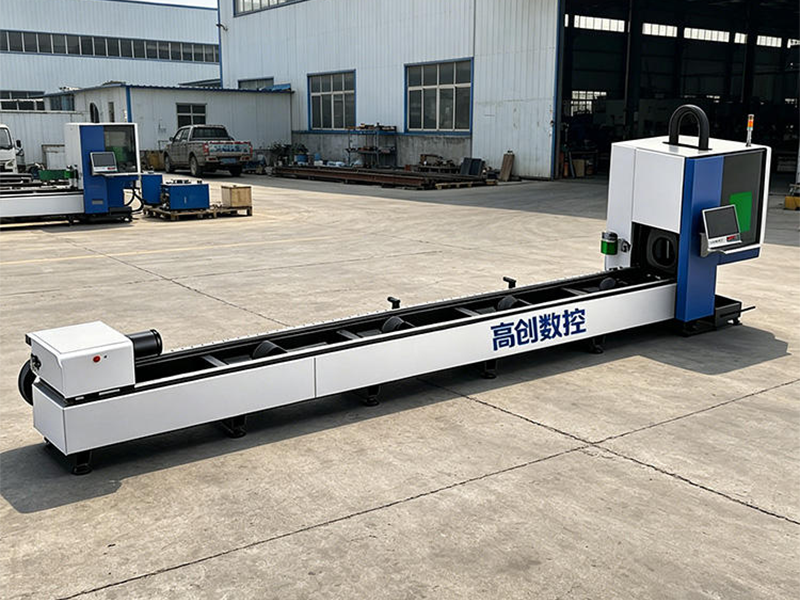
A CNC tube laser cutter is a computer-controlled fiber laser system specially built for tubular and open profiles. Unlike flat sheet laser cutters, it uses rotating chucks, automatic feeding and 3D cutting heads to process round tube, square tube, rectangular tube, angle steel, channel steel and other special profiles. Operators import DXF or DWG drawings into the CNC software, set cutting parameters, and the machine automatically completes length cuts, holes, slots, notches, bevels and complex joint contours in one single operation.
What Makes a CNC Tube Laser Cutter Stand Out From Traditional Cutting
Traditional tube processing relies on band saws, punch presses and plasma cutters. Each different hole or angle usually needs a new jig, and finished parts often go to deburring and grinding stations after cutting.
A CNC tube laser cutter removes most of those extra steps:
- Ultra-precise cutting with narrow kerf The focused fiber laser beam creates a tiny kerf and minimal heat-affected zone. Most models hold tight repeatable tolerances, with clean, burr-free edges. In many cases, parts go straight to welding or assembly without extra finishing work. Perfect fit means less filler metal, stronger welds and fewer rejected parts.
- Unmatched design flexibility, no custom molds You can switch from simple straight cuts to fish-mouth joints, staggered holes, miter bevels and decorative cutouts within minutes. One machine handles prototypes, small-batch custom orders and mass production. You do not need expensive stamping dies, which is a huge advantage for custom metal furniture, architectural projects and low-volume OEM parts.
- Automatic loading & unloading saves labor and downtime Most modern CNC tube laser cutters come with an automatic feeder and unloading rack. Long raw tubes are loaded automatically, cut parts separate from scrap, and tail material is minimized by smart nesting software. One operator can run multiple machines, cutting labor cost and boosting daily output for high-volume orders.
- Wide material compatibility Standard fiber CNC tube laser cutters process mild steel, stainless steel, aluminum, galvanized steel and brass. It supports a wide range of tube diameters and wall thicknesses, depending on laser power from 1kW up to 12kW and chuck capacity.
Top Industries Using CNC Tube Laser Cutters
- Automotive & motorcycle: Chassis frames, roll cages, exhaust tube brackets, structural tubular parts
- Construction & architectural metalwork: Handrails, steel frames, support tubes, facade profiles
- Metal furniture & display racks: Table frames, chair bases, retail display stands
- Agricultural machinery: Equipment frames, support pipes and linkage components
- HVAC and pipeline: Precision branch joints, pipe connectors and support brackets
- Fitness equipment: Gym frame tubes and structural profile parts
Key Features To Compare When Shopping for a CNC Tube Laser Cutter
If you plan to add a CNC tube laser cutter to your factory, focus on these core specs:
- Tube capacity: Maximum diameter, maximum tube length and profile types (round / square / channel / angle)
- Laser source: Reliable fiber laser brand, available power level
- Chuck type: Single chuck, dual-chuck or three-chuck for heavy and long tubes
- Auto-focus cutting head: Stable cutting quality when wall thickness changes
- Nesting software: Professional tube cutting CAM software to reduce leftover scrap
- Dust and fume extraction system: Important for safe, clean workshop operation
- After-sales support: Installation, operator training and spare parts availability
What Are The Limitations?
A CNC tube laser cutter delivers powerful advantages, but it is not for every business. The upfront investment is higher than saws or manual cutting tools. It also requires trained operators for programming, parameter tuning and daily maintenance. For extremely thick heavy profiles, some fabricators still combine laser cutting with plasma or machining. For most tube fabrication jobs from thin to medium wall thickness, the ROI from faster turnaround and less rework is very attractive.
Final Thoughts
For metal fabrication businesses that want to win more custom orders, shorten lead times and reduce waste, the CNC tube laser cutter is one of the most impactful upgrades you can make. It consolidates multiple cutting operations into one automated workflow, improves part consistency and unlocks complex tubular designs that are hard or uneconomical to produce by old methods.
If you are sourcing a reliable CNC tube laser cutter for your workshop, match the machine’s tube size range, laser power and automation level to your typical projects. A well-selected fiber tube laser system will become a core profit driver for your metal shop for years.
FAQ
Q: Can a CNC tube laser cutter cut square tube and channel steel? A: Yes. Most professional models support round, square, rectangular tube, angle iron and C-channel profiles.
Q: Do laser-cut tube parts need deburring? A: Fiber laser produces clean edges. Light deburring may still be needed for some aluminum or thick stainless steel, but the workload is far less than saw or plasma cutting.
Q: What file format do I need for tube laser cutting? A: DXF and DWG are standard. Professional tube laser software also supports 3D step files for complex joint programming.