Introduction
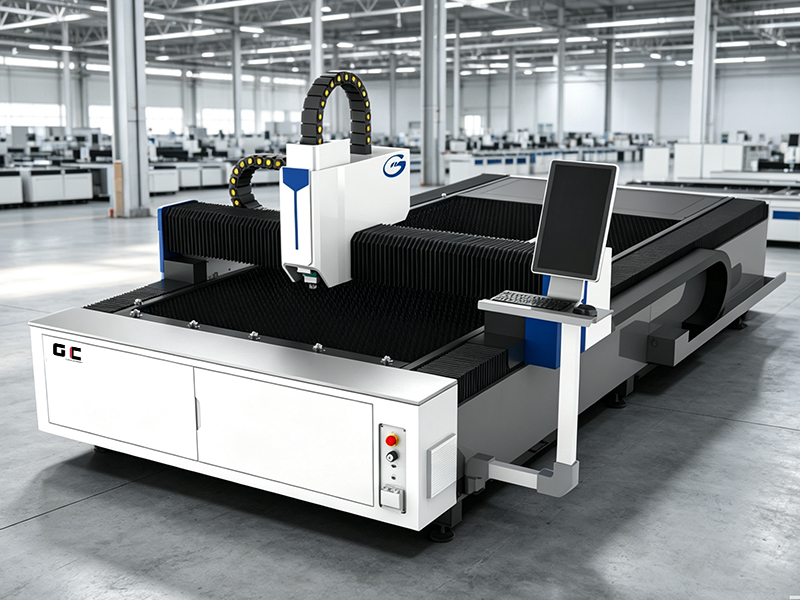
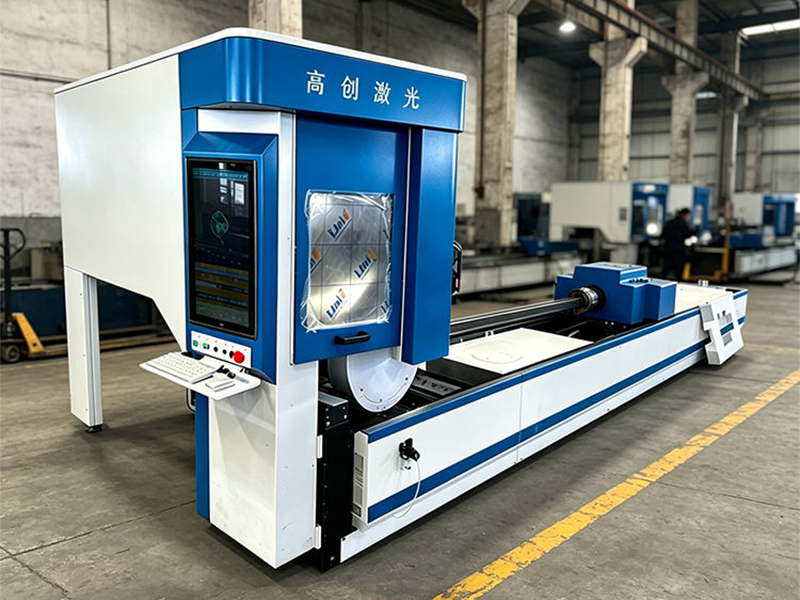
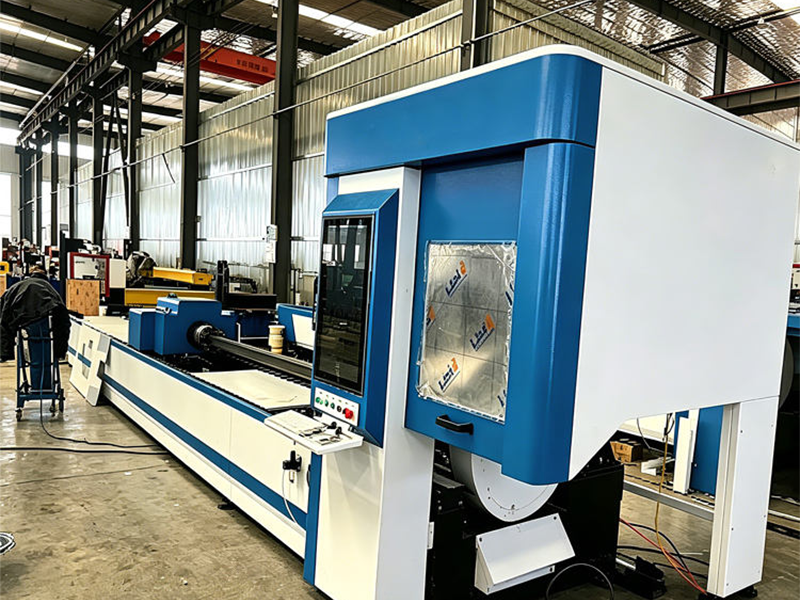
Different from flat sheet laser cutters, a metal tube laser cutting machine is built with rotating chucks, multi-axis motion and professional tube nesting software. It holds, spins and feeds metal tubes while the fiber laser beam executes cutting, piercing, slotting, coping, beveling and marking in one single setup. If your workshop produces structural frames, automotive parts, furniture or architectural metalwork, upgrading to a CNC metal tube laser cutter can directly lift your throughput and profit margin.
What Is a Metal Tube Laser Cutting Machine?
A metal tube laser cutting machine is a specialized fiber CNC laser system for non-contact metal tube and profile fabrication. It uses a high-density fiber laser beam to melt and vaporize metal along programmed tool paths. Its multi-axis system synchronizes tube rotation, longitudinal movement and cutting head tilting, which makes complex 3D cuts possible.
It supports not only standard round pipes, square and rectangular tubes, but also angle steel, U-channel and other open profiles. Common processable metals include carbon steel, stainless steel, aluminum alloy and brass. Unlike manual or mechanical cutting, laser tube cutting delivers clean, burr-free edges, and most finished parts are ready for welding or assembly without secondary grinding.
Core Advantages of Metal Tube Laser Cutting Machine
1. Ultra-High Precision & Consistent Quality
Most industrial metal tube laser cutting machines reach positioning accuracy of ±0.05 mm. Tight tolerance eliminates fitting gaps during assembly, reduces welding correction work and keeps batch parts highly consistent. The narrow heat-affected zone prevents tube deformation, which is critical for thin-wall stainless steel and aluminum tubes.
2. One Machine Replaces Multiple Tools
This is one of the biggest ROI drivers. A metal tube laser cutting machine combines sawing, drilling, notching, beveling and coping. One loading produces finished components, cutting down material handling, labor cost and turnaround time. Many fabricators cut lead time by 50% or more after switching from traditional tube processing lines.
3. Excellent Design Freedom for Complex Parts
You can import DXF, DWG and 3D CAD files directly into the tube laser software. Intricate cutouts, intersecting coping joints, angled bevels and custom decorative patterns are easy to program. It opens opportunities for custom architectural metal, EV chassis frames, fitness equipment and agricultural machinery parts that are hard or costly to make by conventional methods.
4. Lower Material Waste with Smart Nesting
Professional tube nesting software optimizes part layout along the tube length, minimizing offcuts. Some advanced models support zero-tail cutting function, which greatly saves expensive stainless steel and aluminum raw materials for high-volume production shops.
5. Flexible Automation Options
From semi-automatic single-chuck models for small workshops to fully automatic bundle loading & unloading systems for mass production. Automatic loading reduces heavy manual feeding and improves safety. Operators only need to set programs and monitor running status instead of repetitive clamping and measuring work.
Main Industry Applications
- Structural steel & construction: handrails, steel frames, truss components, bracket parts
- Automotive & EV industry: chassis tubes, roll cages, suspension brackets
- Metal furniture & fitness equipment: gym frames, chair and table metal supports
- Agricultural machinery: equipment frames, pipe connectors
- Architectural metalwork: decorative tube screens, facade profiles
- Energy & pipeline accessories: precision pipe fittings and support structures
Key Factors to Consider Before Buying a Metal Tube Laser Cutting Machine
- Tube size range: Confirm the max and min tube diameter, and max tube length your jobs require. Common ranges cover 20–220 mm, while heavy-duty models handle larger pipes up to 600 mm+.
- Laser power: 1500W–3000W works well for thin and medium carbon steel, stainless steel and aluminum tubes. 6000W and higher power suits thick-wall heavy steel pipe cutting.
- Chuck structure: Single-chuck, double-chuck or three-chuck design. Double-chuck and floating support deliver better stability for long and heavy tubes.
- Software compatibility: Check whether the nesting software supports your CAD format and automatic bevel compensation.
- Automation level: Semi-auto for small job shops with mixed orders; automatic bundle loader for high-volume production lines.
- After-sales support: Local service, spare parts availability and operator training are important for long stable operation.
Metal Tube Laser Cutting Machine vs Traditional Tube Cutting
| Feature | Metal Tube Laser Cutting Machine | Band Saw / Plasma Cutting |
|---|---|---|
| Edge quality | Burr-free, smooth | Burrs, rough cut, need grinding |
| Precision | ±0.05 mm | Low tolerance, unstable |
| Processes | Cut, drill, bevel, coping in one | Separate stations for each operation |
| Complex shapes | Support 3D profiles, coping joints | Limited simple straight cuts |
| Speed | Fast, high throughput | Slow, labor-intensive |
| Waste | Optimized nesting, less scrap | More offcuts and waste |
FAQ
Q1: Can a metal tube laser cutting machine cut aluminum tubes?
Yes. Fiber laser tube cutters process aluminum, stainless steel, carbon steel and brass. Aluminum has high reflectivity, so the machine needs anti-reflection laser protection design.
Q2: Do I need secondary finishing after laser tube cutting?
In most cases, no. Laser-cut edges are clean without burrs, ready for welding. Only special surface coating requirements need extra treatment.
Q3: Is it suitable for small custom orders?
Absolutely. CNC programming allows fast job switching. Many small fabricators use mid-range metal tube laser cutting machines to handle mixed custom orders and gain competitive advantages.
Conclusion
For modern metal fabrication businesses, a metal tube laser cutting machine is more than a cutting device. It is an investment that upgrades your production capacity, expands your product range and wins more high-precision tube processing orders. Whether you run a small custom shop or a large structural steel factory, matching the right laser power, tube capacity and automation level to your workpiece will bring clear efficiency gains and better ROI.
If you want reliable metal tube laser cutting solutions for your fabrication project, contact us for sample cutting tests and customized quotation.