What Is a CNC Metal Cutting Machine?
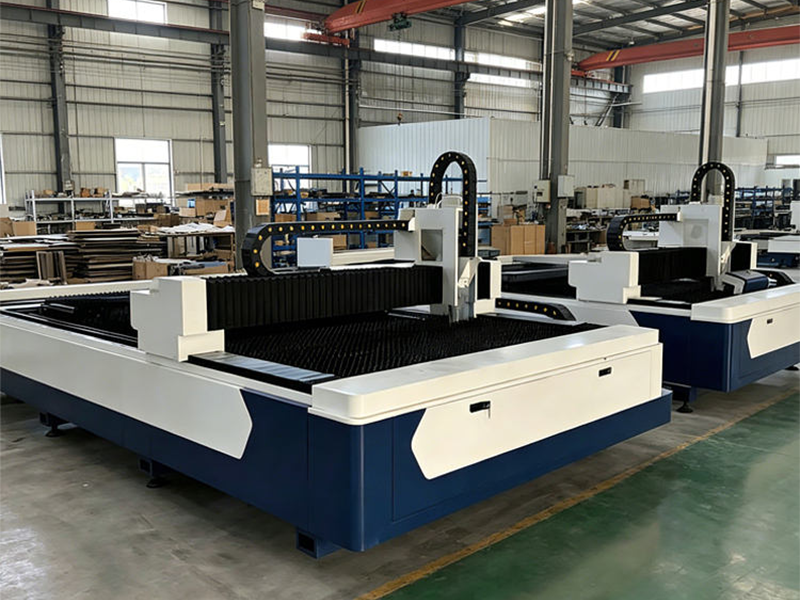
How Does a CNC Metal Cutting Machine Work?
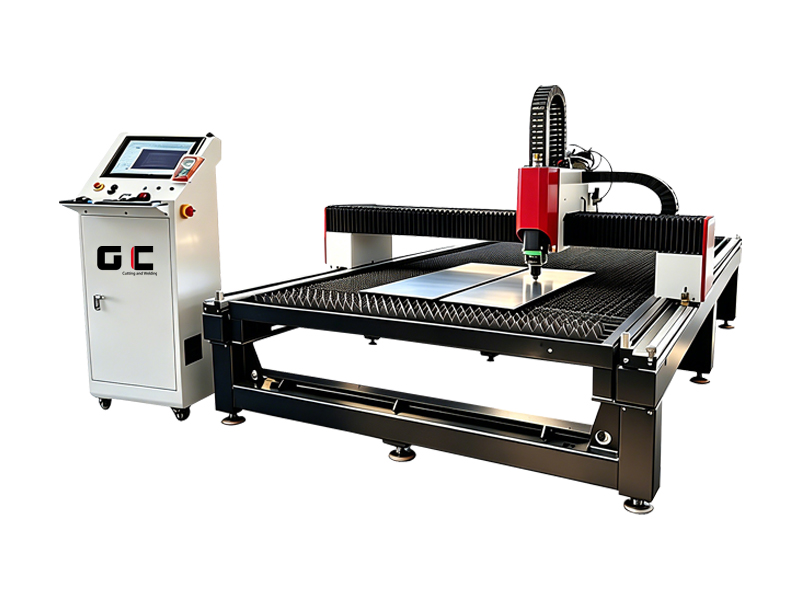
At its core, a CNC metal cutting machine follows the same basic workflow. First, the designer creates a part drawing in CAD software. The programmer then nests multiple parts onto a sheet or tube to maximize material utilization. The CNC controller translates the nested layout into motion commands, and the machine moves the cutting head along the X, Y, and sometimes Z or rotary axes.
In a fiber laser system, a high-energy laser beam melts, burns, or vaporizes the metal while assist gas blows away molten material. In a plasma system, a superheated plasma arc melts conductive metal, and compressed gas removes the residue. In a waterjet system, high-pressure water mixed with abrasive garnet erodes the material without generating heat.
The result is a controlled cut that repeats the same geometry thousands of times without human interpretation. This consistency matters most when parts must fit together during welding, bending, or final assembly.
Main Types of CNC Metal Cutting Machines
1. Fiber Laser Cutting Machine
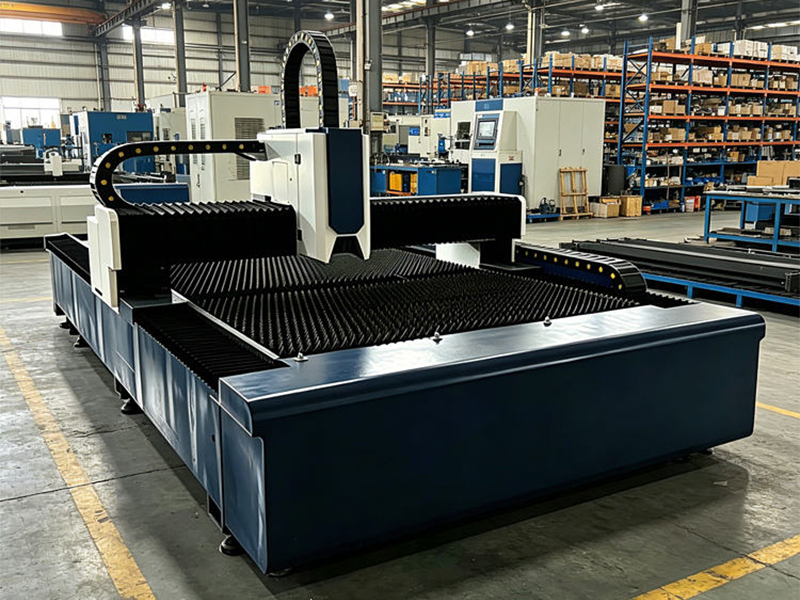
The fiber laser CNC metal cutting machine has become the mainstream choice for sheet metal fabrication. Its concentrated beam delivers narrow kerf, clean edges, fast cutting speed, and excellent repeatability on carbon steel, stainless steel, aluminum, galvanized steel, copper, and brass.
Fiber lasers are especially effective for thin and medium-thickness sheet metal. They produce smooth edges with minimal dross, which reduces secondary grinding and allows parts to move directly to bending or welding. Modern machines also support automatic loading, unloading, exchange tables, and smart nesting software for continuous production.
2. CNC Plasma Cutting Machine
CNC plasma cutting remains the most cost-effective solution for thick conductive steel plate. It offers a lower capital investment and strong performance on structural steel, shipbuilding plate, and heavy fabrication work.
Compared with laser cutting, plasma generally produces a wider kerf, a larger heat-affected zone, and a less square edge. It is less suitable for fine details or tight-tolerance decorative parts, but it remains highly practical when speed and budget matter more than mirror-finish edges.
3. CNC Waterjet Cutting Machine
Waterjet cutting is a cold-cutting process that produces zero heat-affected zone. It can cut steel, titanium, Inconel, glass, stone, composites, and many mixed materials. Because no heat changes the metallurgical structure, it is valuable for aerospace, defense, medical, and heat-sensitive alloy applications.
The tradeoff is speed and operating cost. Waterjet cutting is slower than laser or plasma, and abrasive garnet, pump maintenance, and sludge disposal add ongoing expense. It should be selected when thermal distortion would damage the part, not simply because it can cut almost anything.
4. Sheet and Tube Combo Machine
A sheet and tube CNC metal cutting machine combines flat-sheet processing with rotary tube cutting on one platform. It can cut round tube, square tube, rectangular tube, angle steel, channel steel, and selected profiles while also processing sheet metal.
This configuration is popular among job shops and small-to-medium manufacturers that handle mixed orders. Instead of buying two separate machines, one system handles brackets, frames, enclosures, and tubular components. For factories with stable tube demand, a dedicated tube laser may still offer higher efficiency, but a combo machine provides valuable flexibility.
Key Factors When Choosing a CNC Metal Cutting Machine
Material Type and Thickness
Start with the materials you cut every week, not the occasional special order. Carbon steel, stainless steel, aluminum, copper, and brass behave differently under each cutting process. Aluminum and copper are reflective and require proper laser settings and back-reflection protection. Thick structural steel may favor plasma, while thin stainless sheet usually performs better on a fiber laser.
Also distinguish between maximum cutting thickness and economic cutting thickness. A machine may technically cut 25 mm steel at reduced speed, but that does not mean it should be your daily production capacity. Evaluate the thickness range where the machine keeps practical speed, stable edge quality, and reasonable operating cost.
Laser Power and Production Speed
Laser power should match your regular workload. A 1.5 kW to 3 kW machine suits thin sheet, furniture tubing, decorative parts, and light fabrication. A 6 kW system handles medium-thickness steel and higher-volume production. Higher-power 12 kW or 20 kW machines serve heavy plate and high-throughput industrial shops.
Buying more power than you need increases the purchase price, electricity consumption, and maintenance burden. Buying too little limits speed and forces the machine to run near its limit every day. A practical approach is to match power to your average thickness, with a small buffer for future orders.
Working Area and Workpiece Size
Check the maximum sheet size, tube diameter, tube length, and weight capacity. A 3015 machine covers standard 1.5 m × 3 m sheet, while larger beds suit oversized plates and long structural profiles. For tube cutting, confirm the chuck diameter, clamping force, tailing waste, and support length.
If your factory regularly processes 6 m pipe, choose a bed that can handle the full stock length instead of forcing operators to cut material in advance.
Automation and Daily Output
Manual loading works for small batch production, but high-volume shops benefit from automatic loaders, unloaders, exchange tables, and storage towers. Automation reduces waiting time, protects operators from heavy material handling, and increases spindle-on hours.
However, automation should be justified by production volume. If the machine runs only a few hours per day, extra automation may delay your return on investment.
Software and Nesting Capability
Good hardware still depends on good software. Look for intuitive nesting, automatic part arrangement, common-line cutting, material-saving algorithms, and easy file import. Strong software can reduce scrap and increase the number of parts per sheet, directly improving profit margin.
Total Cost of Ownership
Do not compare only the headline machine price. Include laser source, chiller, dust extraction, assist gas, consumables, installation, training, spare parts, warranty, and after-sales service. A slightly cheaper machine with slow technical support may cost more during production downtime.
Common Applications
A CNC metal cutting machine serves many industries, including:
- Sheet metal enclosures and electrical cabinets
- Automotive and motorcycle parts
- Agricultural machinery brackets and frames
- Fitness equipment and furniture frames
- Advertising signs and decorative panels
- Kitchen equipment and stainless steel products
- Structural steel and construction components
- Metal signage, filters, brackets, and custom fabrication
Fiber Laser vs. Plasma vs. Waterjet: Quick Comparison
表格
| Factor | Fiber Laser | Plasma | Waterjet |
|---|---|---|---|
| Best for | Thin and medium sheet | Thick conductive plate | Heat-sensitive materials |
| Precision | High | Medium | High |
| Edge quality | Clean, minimal dross | May need finishing | Smooth, no heat effect |
| Speed | Fast on thin sheet | Fast on thick plate | Slower |
| Heat-affected zone | Small | Larger | Zero |
| Operating cost | Balanced | Lower entry cost | Higher abrasive cost |
For most modern sheet metal factories, the fiber laser CNC metal cutting machine offers the strongest balance of speed, precision, edge quality, and long-term operating economy. Plasma remains valuable for heavy plate, and waterjet remains necessary for specialized cold-cutting applications.
Final Checklist Before You Buy
Before requesting a quotation, prepare the following information:
- Main materials and regular thickness range
- Maximum occasional thickness
- Sheet size, tube diameter, and tube length
- Daily or monthly production volume
- Required tolerance and edge quality
- Manual, semi-automatic, or automatic workflow
- Budget and expected return on investment
- Local service, spare parts, and training support
Ask the supplier for sample cutting, a total cost breakdown, machine configuration drawings, and after-sales response time. A reliable manufacturer should help you configure your ideal CNC metal cutting machine instead of simply selling the most expensive unit.
Conclusion
A CNC metal cutting machine is a long-term production investment, not a one-time purchase. The best system is not always the most powerful or the cheapest one. It is the machine that matches your material mix, thickness range, production volume, and future growth.
For precision sheet metal, fiber laser cutting usually delivers the best daily performance. For thick structural steel, plasma offers a practical cost advantage. For heat-sensitive alloys and mixed materials, waterjet remains irreplaceable. By comparing total cost of ownership rather than price alone, you can select a CNC metal cutting machine that improves quality, reduces labor, and supports stable factory growth.