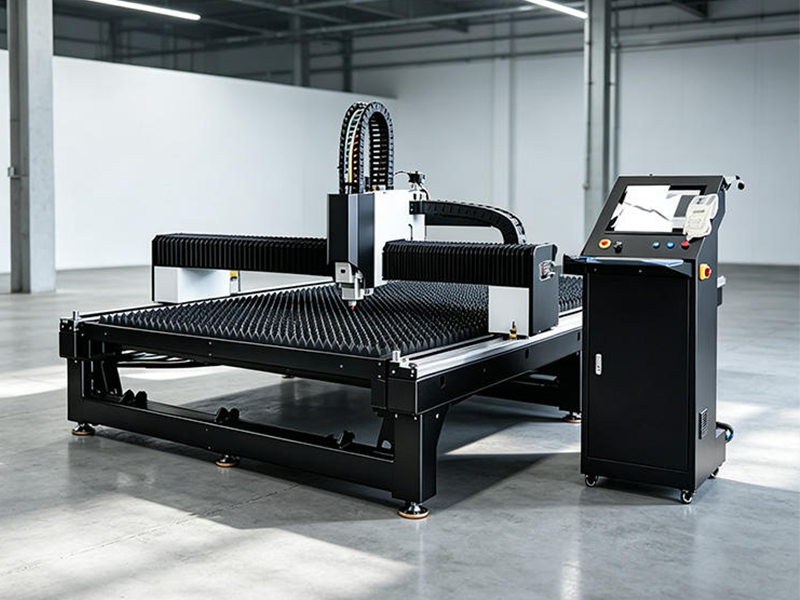
The smallest fiber laser cutter is redefining what’s possible in compact metal fabrication. Designed for studios, garages, maker spaces, and small businesses, these machines deliver the precision of industrial fiber lasers in a fraction of the size.
What Is the Smallest Fiber Laser Cutter?
A small fiber laser cutter is a compact CNC machine that uses fiber optic laser technology to cut sheet metal with high accuracy. Unlike large industrial cutters that dominate the factory floor, the smallest models typically feature a small working area—often around 300×300 mm or similar compact dimensions—making them ideal for fine, detailed work.
These machines are not just “mini” in size; they are engineered for real metal cutting. Most include rigid frames, precision motion systems, dedicated laser sources, safety enclosures, and compatible software for importing vector files like DXF and AI.
Why Go Small With a Fiber Laser Cutter?
1. Minimal Space Requirement
The biggest advantage of the smallest fiber laser cutter is its small footprint. It can fit on a workbench, in a corner of a studio, or inside a small workshop without requiring an entire production room.
2. High Precision on Fine Details
Compact fiber lasers can produce extremely clean cuts with narrow kerfs, tight tolerances, and minimal heat-affected zones. This makes them perfect for intricate patterns, small parts, delicate geometries, and high-value metal components.
3. Versatility Across Metals
A small fiber laser cutter can process a wide range of metals, including:
- Stainless steel
- Carbon steel
- Brass
- Copper
- Aluminum
- Silver
- Gold
- Titanium
This versatility is especially valuable for jewelry makers, custom part producers, and small-batch manufacturers.
4. Lower Operating Costs
Compared with full-size fiber laser cutters, the smallest models usually consume less power, require fewer resources, and have more manageable maintenance needs. For small businesses, this can mean a faster path to ROI.
5. Safer Indoor Operation
Many compact fiber laser cutters come with fully enclosed cabinets, laser-safe viewing windows, emergency stop buttons, and exhaust ports. These features help create a safer working environment when operating indoors.
Typical Applications
The smallest fiber laser cutter is particularly strong in high-precision, small-format production. Common applications include:
- Jewelry and precious metal components
- Custom nameplates and metal tags
- Small mechanical parts
- Electronic shims and brackets
- Decorative metal crafts
- Architectural models
- Prototyping and R&D samples
- Educational and maker-lab projects
It is important to note that these machines are optimized for small parts and thin-to-medium sheet metal. They are not intended for high-volume production of large steel plates.
Smallest Fiber Laser Cutter vs. Fiber Laser Marking Machine
Many people confuse fiber laser cutters with fiber laser markers. The difference is fundamental:
- Fiber laser marking machines are designed to engrave or mark metal surfaces.
- Small fiber laser cutters are designed to cut through metal sheets.
If your goal is to produce through-cut parts, outlines, and separated metal components, you need a cutter—not just a marker.
What to Look for When Buying the Smallest Fiber Laser Cutter
Working Area
Check whether the bed size matches your typical part dimensions. For small components, a compact 300×300 mm or similar platform is often sufficient.
Laser Power
Laser power directly affects cutting capability. Small fiber laser cutters are available in different power ranges, and thicker metal requires higher wattage. Always review the actual cutting thickness specifications for each material.
Cutting Quality
Look for clean edges, consistent precision, low burr, and minimal thermal distortion. Asking for sample cuts is one of the best ways to evaluate performance.
Software Compatibility
A good small fiber laser cutter should work smoothly with standard vector files and industrial control software. Compatibility with DXF, AI, PLT, and common laser-cutting programs will affect your daily workflow.
Cooling System
Stable cooling is essential for consistent laser performance. Many compact models use water cooling to maintain reliable operation over long periods.
Safety Features
Prioritize machines with enclosed covers, protective windows, exhaust connections, and emergency stop functions. Laser safety should never be an afterthought.
Support and Warranty
Buying the smallest fiber laser cutter is an investment. Make sure the supplier offers technical support, training guidance, spare parts access, and a clear warranty policy.
Who Should Consider a Compact Fiber Laser Cutter?
The smallest fiber laser cutter is an excellent choice for:
- Jewelry studios
- Custom metal